Desk-related back and neck pain rarely arrives as an injury. It arrives as a pattern: stiffness by Thursday, a headache that starts at the base of the skull around 3 p.m., a lower back that complains on the drive home to Concord and loosens up by Saturday, only to do it all again next week. Nothing is broken. What you have is a dose problem. The human spine tolerates sitting perfectly well in short exposures and objects to it in long, unbroken ones, which is why the fixes that work are about dose and position rather than finding one perfect, expensive chair.
- Screen top at or just below eye level, about an arm's length away, no laptop hunch
- Feet flat on the floor or a footrest, knees at roughly hip height or slightly below
- Lower back supported so the chair, not your muscles, holds your curve
- Keyboard and mouse close, elbows bent near 90 degrees, shoulders dropped
- Phone out of the crook of your neck; headset or speaker for calls
- A position change or short walk every 30 to 45 minutes, timed, not remembered
- Laptop users: a stand plus a separate keyboard is the whole fix, and it is not optional long term
What hours of sitting actually do
Sitting shifts load onto the discs of the lower spine, especially in the slumped posture most people drift into by mid-morning, and it parks the neck in a forward position as the head migrates toward the screen. A human head held forward of the shoulders asks the neck muscles to hold a load they were not built to hold statically, and they file their complaint as tension, stiffness, and headaches that start in the neck. Meanwhile the muscles meant to stabilize the trunk, the deep core and the gluteals, switch off from disuse. The result is a system that is simultaneously overloaded in the wrong places and weakened in the right ones, so ordinary weekend jobs, a cooler lifted wrong at the lake, a Saturday of yard work in red clay soil, land on a back with no reserve.
The setup changes in order of value
Start with the screen, because your body follows your eyes. The top of the screen should sit at or slightly below eye level at about an arm's length. Laptop users working hunched over a low screen on a kitchen table are running the worst common setup in America; a laptop stand and a separate keyboard fix it completely and are the correct first purchase, before any chair. Next, the chair's job: feet flat, knees near hip height, and the lower back supported so its natural curve rests against something rather than being held by effort. You do not need an ergonomic monument. You need the support to exist, which a small cushion accomplishes in most chairs.
Finally, geometry of the arms: keyboard and mouse close enough that elbows stay near your sides at roughly a right angle with shoulders relaxed and dropped. Reaching forward all day for a distant mouse is a quiet, common source of one-sided neck and shoulder pain that puzzles people because the mouse weighs almost nothing. It is not the weight. It is the eight hours.
The habit that matters more than the furniture
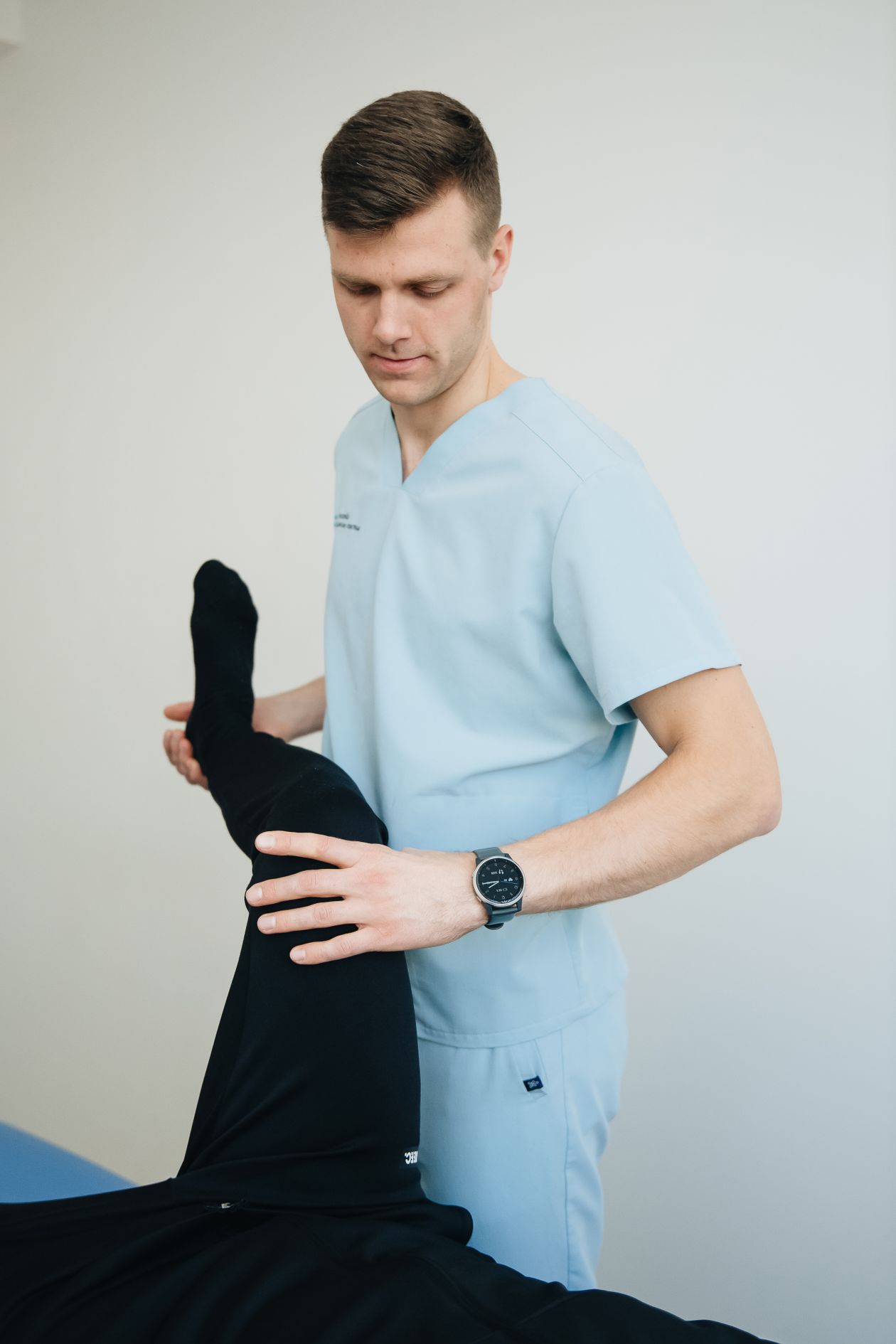
Every study of sitting reaches the same conclusion, and it is not about posture perfection. It is about interruption. Bodies tolerate even mediocre positions if they change regularly, and suffer in excellent chairs held motionless. Set a timer for 30 to 45 minutes and actually stand, walk to get water, roll your shoulders, look at something far away. Two minutes counts. This single habit outperforms most equipment budgets, and it is the advice chiropractors give knowing full well it costs nothing. Clinics like Hall Clinic of Chiropractic build rehabilitative exercise into care plans for the same reason: the adjustment addresses the joints, but the muscles that switched off at your desk have to be switched back on by use, and a spine whose support crew is awake re-injures itself far less often.
When the pattern needs a professional look
Setup fixes and movement breaks should move desk pain noticeably within two to three weeks. Book an assessment when pain persists past that trial, when it starts traveling into an arm or leg, when headaches are a regular feature rather than an occasional one, or when stiffness is changing what you can do rather than just how you feel at 5 p.m. Those are signs the dose problem has become a joint or nerve problem, and that is a different job than furniture. The earlier it is assessed, the more of the fix is still in the simple category.

Common questions
What is the best sitting posture for my back?
Feet flat, lower back supported in its natural curve, screen at eye level, and arms close with shoulders relaxed. But variety beats any single posture: the best position is the next one, changed every half hour or so.
Do I need an expensive ergonomic chair?
Usually not. A laptop stand and separate keyboard, a cushion for lower back support, and timed movement breaks fix most setups. Spend on the chair only after those basics are in place and a specific problem remains.
Can desk work cause headaches?
Yes. A head held forward of the shoulders for hours overloads the neck muscles, and the resulting tension commonly presents as headaches starting at the base of the skull. Screen height and breaks address the cause; recurring headaches still deserve a professional evaluation.
Photos in this guide are representative stock images.
← All guides from Hall Clinic of Chiropractic← Back to Hall Clinic of Chiropractic